Your brain hits the pillow and decides to open every tab. The to‑do list, the awkward email, the big life question you didn’t invite. Here’s a way to slow that midnight carousel with two tools you already have: your breath and a glass of cold water.
The room turns into a quiet auditorium, and your thoughts start performing like they’ve trained for this exact hour. The ceiling becomes a screen for worries that didn’t make the cut at noon but show up as headliners at 2 a.m. You try to negotiate with your mind, then you try to ignore it, then you check the time and feel the pressure rise.
Someone down the hall coughs. A car passes, a stray sound that makes you strangely alert. You shift your pillow for the fifth time and think, if I fall asleep now, I’ll still get five hours. Then four and a half. Then four. A small number can feel like a cliff edge.
There’s a tiny move that breaks that spiral. **Your breath is the fastest remote control for your nervous system.**
Why your mind sprints at 2 a.m.
Nights amplify everything because your world gets quiet and the brain has room to roam. Without daylight tasks, the threat-detection system gets chatty, scanning for unfinished business. That’s not failure. That’s a healthy brain doing too much of a good thing.
We’ve all had that moment when the room is calm but your chest feels busy. Heart a touch faster, jaw a bit tight, breath shallow and high. That’s your sympathetic system, the part wired for readiness, still idling in gear after a long day.
The opposite switch exists, and it’s boring in the best way: longer exhales invite your body into rest-and-digest. Think of carbon dioxide as a brake pedal; when you linger on the out-breath, CO₂ rises slightly and blood vessels relax. *This is not a miracle; it’s a lever.* **Calmer breathing gives your brain a fresh headline: safety.**
The two-step reset: breath + a glass of cold water
Step one is a simple pattern called the physiological sigh. Inhale through your nose, then take a second, shorter sip of air to fully inflate the lungs. Now exhale long and slow through the mouth, like you’re fogging a window, until you feel empty. Do this three to five times, then switch to easy nasal breaths with longer exhales, like a 4-count in and a 6-to-8 count out.
Keep the shoulders heavy and the jaw loose. If counting ramps you up, drop the numbers and follow sensation: airy inhale, warm weighted exhale. Let a pause hang at the end of the out-breath for a beat. **Cold water is not a magic fix; it’s a physical nudge that interrupts spirals.**
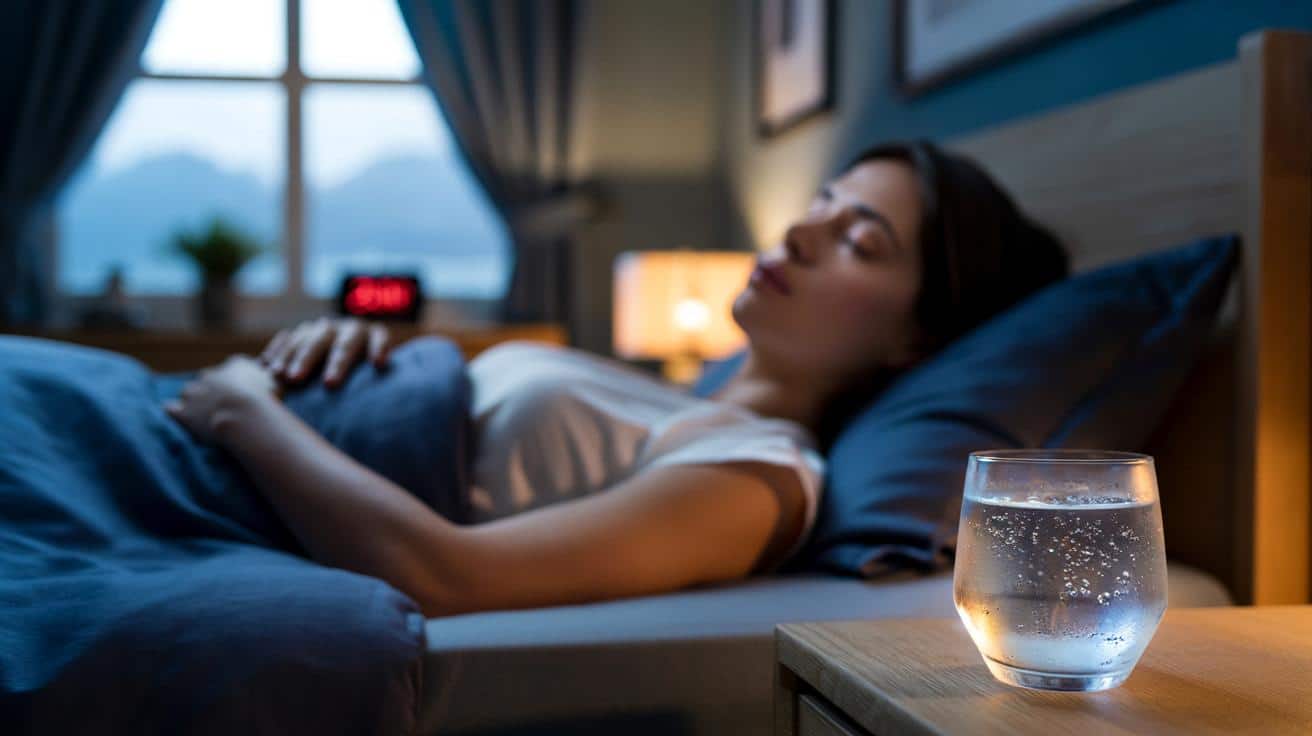
Step two is your glass. Take a small, deliberate sip of cold water and feel the coolness travel down. That temperature change lights up trigeminal and vagal pathways that anchor attention in your body, not your thoughts.
➡️ Hair loss: this is the unlikely ingredient to add to your shampoo to stop shedding
➡️ Criticism of degrees and long studies: a Silicon Valley narrative that resonates in France
➡️ The Norfolk home of the grandmother of Diana, Princess of Wales, has come to the market
➡️ Why diabetes drugs are a scam and the real solution grows in your garden
➡️ This beef mince dinner uses onions, garlic, and broth for deep flavor without complexity
➡️ The umbrella storage hack that stops muddy hallway puddles forever and saves sanity
➡️ The finding of white rocks on Mars supports the idea of a tropical climate 3 billion years ago
“At 2 a.m., your goal isn’t to win a thinking contest. It’s to give your nervous system proof that nothing dangerous is happening.”
- Keep a clear glass within reach so you don’t fumble in the dark.
- Sip, don’t chug. One or two cool sips are enough to mark a reset.
- Return to gentle nasal breaths with longer exhales for a minute.
- If a thought barges in, notice it, then feel the next cool sip and the next exhale.
What it looks like in real life
Picture the clock reading 2:37. You lie there, eyes soft, one hand on your belly. Two‑step inhale through the nose, long loose exhale through the mouth. Repeat a few times. The room feels a degree quieter, like someone turned down the dimmer switch by hand.
Now you reach for the glass. One cold sip, pause, notice your tongue and throat cool, feel your belly settle. A second sip, then you let your attention sit on the exhale, longer than you think it needs. Let’s be honest: no one actually does this every single night. When you do it, though, the edge softens.
There are common tripwires. Forcing big breaths can make you lightheaded, so keep them gentle and low, belly moving more than chest. Don’t punish yourself if the mind keeps talking. You’re not aiming for blankness; you’re aiming for steadier waves. **Small, repeatable cues beat grand resolutions at 2 a.m.**
How to avoid the usual pitfalls (with kindness)
Don’t turn this into a performance. You’re not trying to “win” sleep. The trick is to make the exhale feel like a glide, not a forced push, and to treat the cold sip like a bell that calls you back to the room. Stop after a minute and let your body take the lead.
If you wake often, stage the scene before bed. Fill the glass, clear the nightstand, dim the brightness on your clock. Skip ice cubes if your stomach is sensitive or if cold triggers headaches; cool is plenty. If the mind argues, answer with another long exhale rather than a debate.
Think of this as a pocket ritual, not a cure.
“Racing thoughts aren’t a character flaw. They’re a signal. Give the signal a channel.”
- Two to five physiological sighs, then longer exhales for one minute.
- One to two cool sips, slow and deliberate.
- Return to natural breathing and let sleep come find you.
- If it doesn’t, repeat once, then switch to a low-stakes audiobook or gentle stretch.
A small ritual that grows with you
Ask what kind of night you want to have, not what kind of sleeper you ought to be. There’s power in a ritual that fits on a nightstand and takes ninety seconds. It feels humble. It also works more often than you’d expect because it recruits the body first and lets the brain follow.
On another night, this might look like a single long exhale and one quiet sip. Or it might be five rounds because the day was heavy and loud. Your metric isn’t perfection; it’s whether the room feels a little less sharp and your chest a little more spacious. Share it with a friend who texts you at midnight, buzzing and tired. See what happens when two people try something simple at the same hour in different rooms.
| Point clé | Détail | Intérêt pour le lecteur |
|---|---|---|
| Longer exhales calm the system | Physiological sighs followed by relaxed nasal breathing | Quick, body-first way to slow racing thoughts |
| Cold water anchors attention | One or two cool sips engage grounding pathways | Simple sensory cue that interrupts mental loops |
| Tiny rituals beat big plans | 90-second routine you can repeat on hard nights | Realistic habit that fits busy lives and real fatigue |
FAQ :
- How many physiological sighs should I do?Three to five rounds usually shift the gears, then switch to easy nasal breaths with longer exhales.
- Do I need ice-cold water?No. Cool is enough to create a sensory anchor without shocking your system.
- What if counting breaths makes me anxious?Drop the numbers and follow feel: soft inhale, longer exhale, brief pause.
- Can I use this if I wake at 4 a.m. before a big day?Yes. The two-step reset is built for late‑night wakeups and pre‑dawn jitters.
- What if it doesn’t work right away?Repeat once, then switch to a calm voice track or gentle stretch and try again later.